
What we do on a new build
New construction plumbing happens in phases, and each phase has to be finished and inspected before the next trade can move. Miss one and the whole schedule slides. Here is how we run a house.
1. Underground
Before the slab is poured, we set everything that will be buried under it: the building drain, the floor drains, the lines for any basement bathroom, and the water service coming in from the street. This is the one part of the job that can’t be fixed cheaply later, because it ends up under concrete. We lay it out off the plans, set the slope, and have it ready for the underground inspection.
2. Rough-in
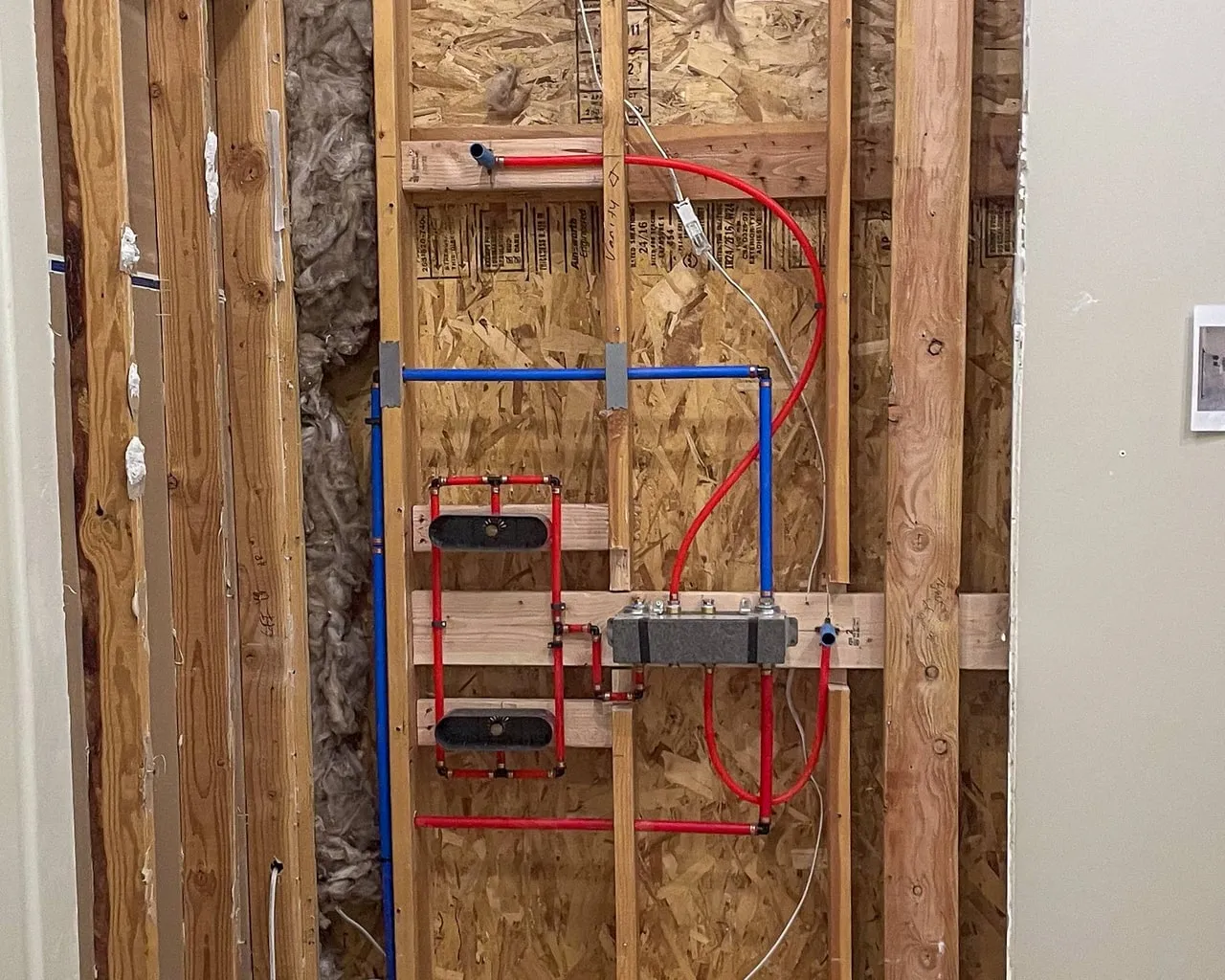
Once the framing is up, we run the plumbing through the walls and floors. That covers:
- Drain, waste and vent piping to every fixture
- Hot and cold water lines
- Gas piping to the furnace, water heater, range, and fireplaces
- Tub and shower valves, set at the right depth for the finished wall
- Stub-outs for sinks, toilets, laundry, and outside hose bibs
The system gets tested before the inspector arrives, so the walls can be closed on schedule.
3. Finish
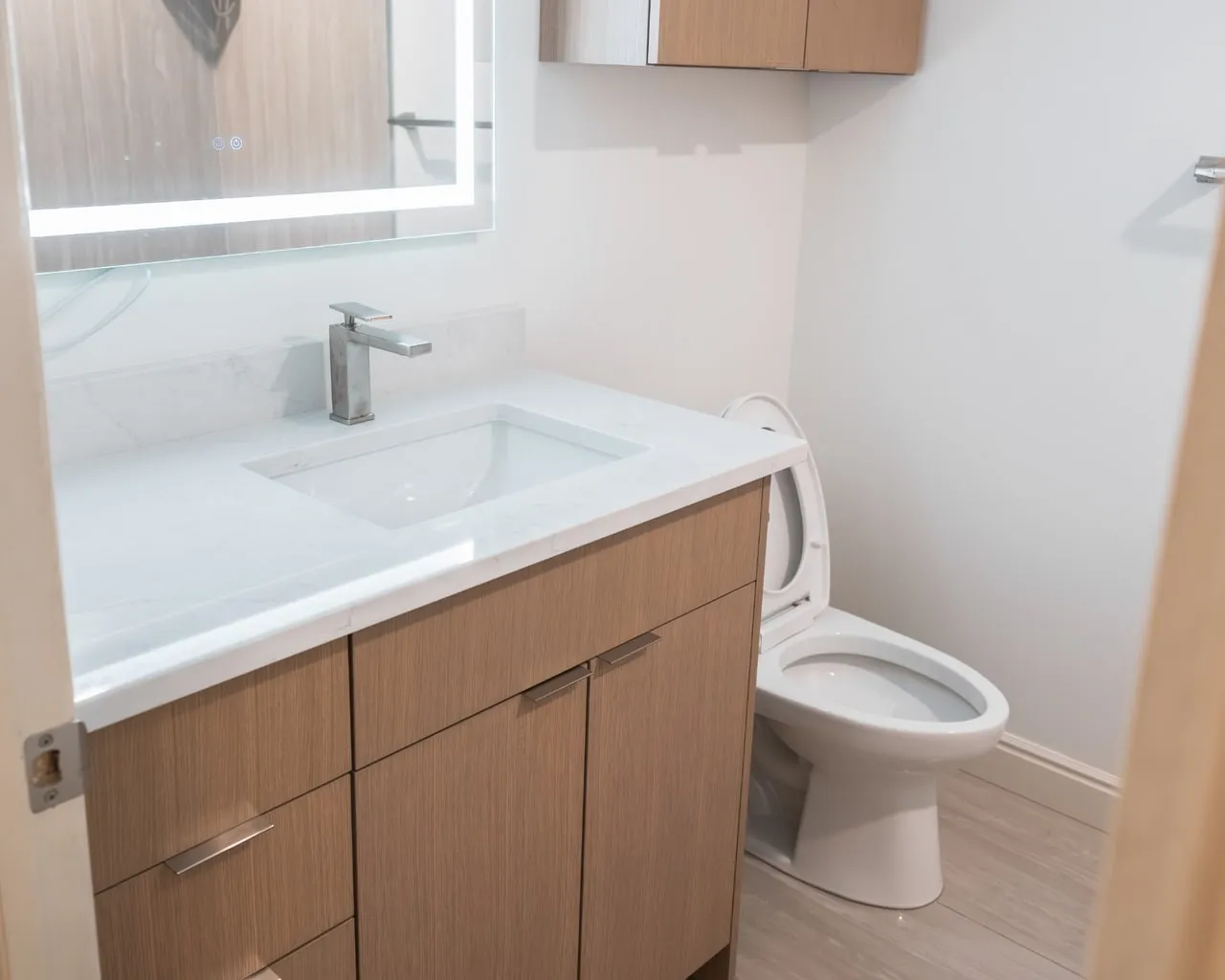
After drywall, paint, cabinets and counters are in, we come back to set the fixtures. Toilets, faucets, sinks, disposals, the dishwasher hookup, tub and shower trim, and the water heater. Everything gets run, checked for leaks, and left ready for the final inspection.
What a builder gets from us
A bid in 1–3 days. You should not have to chase a plumber for a week to get a number. Send the plans and you will have a full bid back in one to three days.
A bid that says what is in it. Fixture count, water heater type, gas runs, what the owner is supplying, and what is not included. If the plans change, we reprice the change and tell you before the work is done, not after.
A crew that shows up for its phase. The framer, the electrician and the drywaller are all waiting on the plumber at some point. We schedule around your inspections so the next trade is not standing around.
A licensed, insured contractor. Black Forest Plumbing LLC holds Utah contractor license #14188786-5501. The crew brings more than 20 years of plumbing experience to the job.
What to send for a bid
The more of this you have, the tighter the bid:
- Floor plans showing every fixture
- A site plan with the water meter and sewer or septic location
- The fixture schedule, or a note saying the owner is supplying fixtures
- Water heater preference: tank, tankless, or more than one
- If you want a water softener or a soft water loop roughed in
- Your target dates for underground and rough-in
No fixture schedule yet? Send what you have. We can bid from a floor plan and firm it up later.
Choices worth making before rough-in
Some decisions are cheap on paper and expensive after drywall.
Tank or tankless. A tankless water heater needs a bigger gas line and its own venting. Both are simple to plan for during rough-in and a lot more work to add later.
A hot water recirculation line. In a large home, the farthest bathroom can wait a long time for hot water. A recirculation line fixes that, and it has to go in while the walls are open.
Soft water loop. Utah water is hard. Roughing in a loop lets you add a softener any time without cutting into finished walls.
Future basement bathroom. If the basement is unfinished, stubbing in the drains under the slab now saves breaking concrete later.
Where we plumb new homes
Our shop is in Taylorsville, and we plumb new homes across Salt Lake County, from infill lots in Salt Lake City to new subdivisions in West Jordan, Herriman and South Jordan. We also plumb custom homes in Park City and Summit County.
Building something that is not a house? See commercial plumbing for tenant improvements and new commercial builds. Adding on to an existing home is closer to remodel plumbing, since it ties into what is already there.